
When you share a long website link, it can look messy, difficult to remember, and sometimes even suspicious. A branded URL shortener solves this problem by turning a long URL into a short, clean, and recognizable link that uses your own brand name or a domain associated with your business. 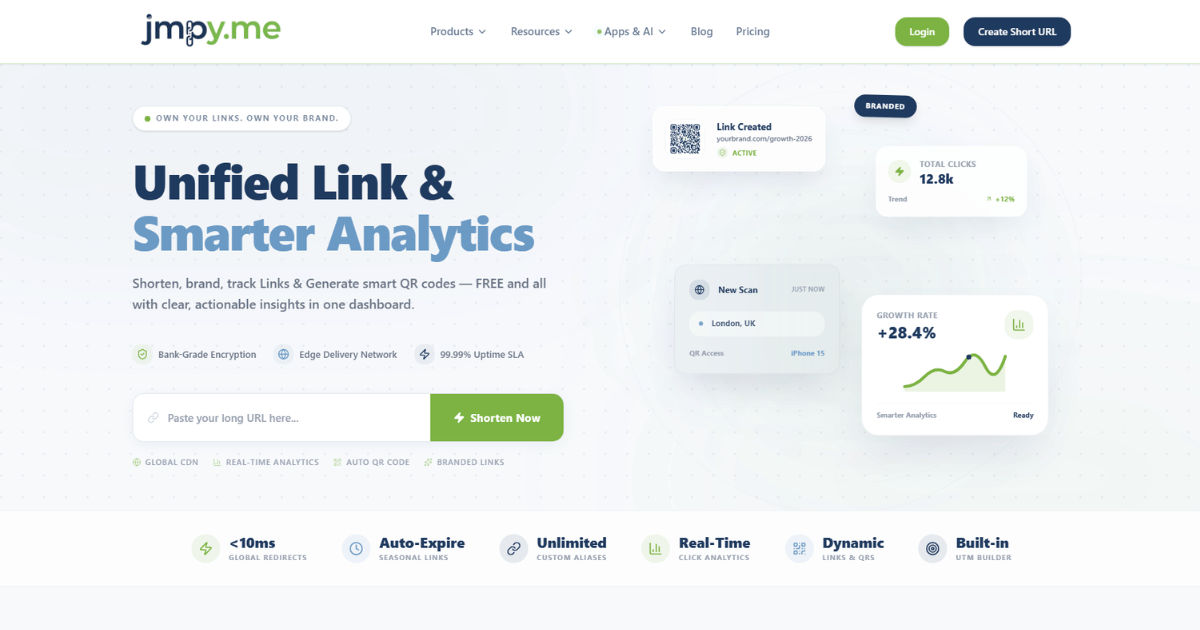 Instead of relying only on a generic shortening service, businesses can create custom branded short links that are easier for people to recognize, trust, remember, and share.
For example, a long link to a product page might contain a large number of characters, tracking parameters, and complicated folders. A branded URL shortener can transform that address into something much simpler and more professional. The shortened link can use a brand's custom domain and a meaningful keyword or phrase that gives users an idea of where the link will take them.
Branded links are useful for businesses, marketers, social media teams, content creators, agencies, and organizations that regularly share links across different platforms. They can make campaigns easier to manage while also providing useful information about how people interact with shared links.
However, a branded URL shortener is more than just a tool for making links shorter. It can become part of a company's digital marketing and communication strategy. Depending on the platform being used, businesses can use branded links for campaign tracking, analytics, audience measurement, QR codes, social media campaigns, email marketing, advertisements, and other online activities.
In this guide, we will explore what a branded URL shortener is, how it works, why businesses use it, what benefits it provides, how it differs from a regular URL shortener, and how to choose the right solution for your needs.
What Is a Branded URL Shortener?
A branded URL shortener is a service or system that creates shortened web addresses using a company's own branded domain instead of a generic shortening domain.
A traditional URL shortener may produce a link that uses the shortening company's domain. The final part of the URL is usually a short combination of letters or numbers.
A branded URL shortener allows an organization to use a custom domain that represents its business or brand.
The basic idea is simple. You start with a long destination URL. The URL shortening platform creates a shorter version. When someone clicks the shortened link, the system redirects that person to the original destination.
The difference is that the shortened URL is associated with your brand.
This can make the link look more professional and recognizable.
For example, a company might use a branded domain specifically for its marketing links. Instead of seeing an unfamiliar shortening domain, users see a link that is clearly connected to the company.
This is particularly valuable when links are shared in public places where users may be cautious about clicking unfamiliar URLs.
How Does a Branded URL Shortener Work?
The process behind a branded URL shortener is relatively straightforward.
First, a business chooses and configures a domain that will be used for its shortened links. This could be a separate domain created specifically for marketing or a domain associated with the company's brand.
The domain is connected to the URL shortening platform through domain configuration settings, usually involving DNS records.
Once the domain is connected, the business can create shortened links through the platform.
The system assigns a short path to the link. The path may be automatically generated or manually customized.
When a person clicks the shortened URL, the request reaches the URL shortening service.
The service identifies the short link and checks which destination URL is associated with it.
The visitor is then redirected to the original webpage.
This process usually happens very quickly, so the user may barely notice the redirection.
Behind the scenes, however, the shortening platform may record information about the click. Depending on the service and privacy settings, this information could include the approximate location of the visitor, device type, browser, referral source, and time of the click.
This data can help marketers understand campaign performance.
Why Do Businesses Use Branded Short Links?
One of the main reasons businesses use branded short links is trust.
People are more likely to recognize and understand a link when the domain is connected to a company they know.
A branded link can communicate the identity of the sender before the person even clicks it.
This is especially important when links are shared through social media, text messages, printed materials, advertisements, or other channels where the surrounding context may be limited.
A short branded link can also look cleaner.
Long URLs often contain technical parameters that make them difficult to read. They may include tracking codes, session information, product categories, or multiple levels of folders.
Shortening the URL removes unnecessary visual complexity while preserving the destination.
Businesses also use branded links because they are easier to manage.
A marketing team may have hundreds or thousands of links active at the same time. A dedicated URL shortening platform can organize those links and provide analytics in one place.
This makes it easier to track campaigns and understand what is working.
Branded URL Shorteners vs. Regular URL Shorteners
A regular URL shortener and a branded URL shortener perform the same basic technical function: they create a shorter URL that redirects users to a longer destination.
The main difference is branding and control.
A standard shortening service generally uses its own domain for the shortened link.
A branded URL shortener allows the business to use a custom domain.
This distinction can have a major effect on how a link is perceived.
Imagine seeing two links shared in an advertisement. One uses an unfamiliar generic domain, while the other clearly uses a domain associated with the company.
The branded option may immediately appear more legitimate and professional.
Branded links can also provide stronger consistency across marketing channels.
The same branded domain can appear in social media posts, email campaigns, printed brochures, advertisements, QR codes, and other materials.
This creates a unified experience.
Another difference is the level of control.
Professional branded URL platforms often provide more advanced analytics, link management, team collaboration, campaign organization, and security features.
A basic URL shortener may be enough for occasional personal use.
For businesses running regular campaigns, however, branded links can provide much greater value.
What Are the Main Benefits of a Branded URL Shortener?
There are several reasons why organizations choose branded URL shortening systems.
The benefits are not limited to making URLs shorter.
They can influence trust, branding, analytics, campaign management, and overall marketing performance.
Improved Brand Recognition
Every time someone sees a branded link, they have another opportunity to recognize the company behind it.
This is particularly useful for businesses that share links frequently.
A company may spend considerable time building brand recognition through its website, logo, advertising, social media presence, and content.
Using a branded link can extend that identity into the URLs themselves.
Instead of treating links as anonymous technical addresses, the business turns them into another part of its brand communication.
Over time, repeated exposure can make the branded domain more familiar to the audience.
Greater User Trust
Trust is an important factor when people decide whether to click a link.
Internet users are increasingly cautious about suspicious URLs because malicious websites and phishing attacks often use deceptive links.
A branded URL does not automatically guarantee that a link is safe, but it can help users understand who is sharing it.
When the domain clearly belongs to a recognizable organization, the link may feel more trustworthy than an unfamiliar shortened address.
However, companies should use branded links responsibly.
A branded domain should always lead users to legitimate destinations and should never be used to hide misleading or harmful content.
Trust can take years to build but only a few bad experiences to lose.
Better Click-Through Potential
Branded links may help improve click-through rates because users can recognize the brand behind the link.
When people understand where a link is coming from, they may feel more comfortable clicking it.
The effect will vary depending on the audience, platform, message, and campaign.
A branded link alone cannot turn an ineffective marketing campaign into a successful one.
The offer, content, audience, timing, and call to action still matter.
However, the link itself becomes part of the overall user experience.
A clean and recognizable URL can remove one small barrier to clicking.
In competitive marketing environments, small improvements across multiple parts of a campaign can make a meaningful difference.
Easier Campaign Tracking
One of the biggest practical benefits of branded URL systems is analytics.
Marketing teams often need to know how many people clicked a campaign link.
They may also want to understand where the clicks came from.
For example, a business might promote the same product through email, Instagram, a printed flyer, and an online advertisement.
Each channel can use a different shortened link that leads to the same destination.
The marketing team can then compare performance across channels.
This makes it easier to determine which platforms are generating engagement.
Tracking can also help businesses understand campaign timing.
Teams may compare clicks during different days or hours to identify patterns.
The information can support better marketing decisions.
Cleaner Social Media Links
Social media platforms often have limited space for written content.
Although some platforms automatically shorten URLs, businesses may still want more control over how their links appear.
A branded short link can look cleaner and more intentional.
This can be especially useful when a social media post is designed around a specific call to action.
Instead of presenting users with a long and complicated web address, the company can provide a concise link that fits naturally into the post.
The result is a cleaner visual presentation.
Better Offline Marketing
Branded links can also be useful outside the internet.
Businesses often print URLs on brochures, business cards, posters, packaging, banners, and promotional materials.
Long URLs are difficult to type manually.
A short branded URL is much easier to remember and enter.
This is valuable when a person sees an advertisement but does not immediately scan a QR code.
They can simply type the short address into their browser.
The shorter the URL, the lower the chance of typing errors.
Integration With QR Codes
Branded short links and QR codes often work well together.
A QR code can direct users to a shortened branded URL.
The destination can then be changed through the URL management platform without necessarily changing the printed QR code, depending on how the QR system is configured.
This is useful for campaigns that run for long periods.
For example, a business might print a QR code on product packaging.
If the company later wants to change the destination from one campaign page to another, a dynamic link system may allow the destination to be updated.
This can reduce the need to redesign and reprint physical materials.
How Branded Links Help With Marketing Campaigns
A successful marketing campaign often involves multiple channels.
A company may promote one offer through social media, email, paid advertising, influencers, websites, and offline marketing.
Without proper tracking, it can be difficult to understand which channels are actually producing results.
Branded URL platforms can help organize these campaigns.
Different links can be created for different channels.
For example, one link can be used for an email campaign, another for a social media campaign, and another for a printed advertisement.
All links can direct visitors to the same landing page.
The analytics can then show how each source performed.
This gives marketers a clearer picture of audience behavior.
It also helps them make better decisions about where to spend future marketing budgets.
What Information Can Branded Link Analytics Provide?
The exact information depends on the URL shortening platform.
Some systems provide basic click counts.
More advanced platforms may provide detailed analytics.
Common metrics can include total clicks, unique clicks, approximate geographic information, device categories, operating systems, browsers, referral sources, and click timing.
These metrics can help answer practical questions.
Which campaign generated the most traffic?
Which platform produced the highest engagement?
Are visitors primarily using mobile devices?
Did a particular advertisement generate more clicks than another?
Are people clicking the link at the times the marketing team expected?
Analytics do not provide every answer.
A click does not necessarily mean a sale, registration, or meaningful conversion.
Businesses should therefore connect link analytics with broader website and conversion analytics whenever possible.
The goal is not simply to count clicks.
The goal is to understand whether those clicks contribute to meaningful business outcomes.
Are Branded URL Shorteners Good for SEO?
A common question is whether URL shortening directly improves search engine rankings.
In general, a branded short URL should not be viewed as a direct SEO ranking factor.
Search engines use many signals to evaluate webpages, and shortening a URL does not automatically make the destination page rank higher.
However, branded links can support marketing activities that indirectly contribute to online visibility.
For example, a clean link may be easier to share.
Better sharing can increase traffic and brand exposure.
A recognizable link may also encourage people to engage with content.
These outcomes can support broader digital marketing efforts.
The important point is to understand that branded URL shortening is primarily a link management, branding, and tracking strategy rather than a direct search engine optimization technique.
Are Branded Short Links Safe?
Branded short links can be safe when they are managed properly.
The security of a shortened link depends partly on the service provider and partly on how the business uses the system.
Businesses should choose reputable platforms with strong security controls.
They should also protect administrative accounts with strong passwords and multi-factor authentication where available.
Access should be limited to authorized team members.
Companies should regularly review active links and remove or disable links that are no longer needed.
It is also important to monitor the reputation of the branded domain.
If a branded domain is used to distribute spam or malicious content, it can damage the organization's reputation.
For this reason, security and governance should be treated as part of link management.
What Makes a Good Branded URL?
A good branded URL should be short, recognizable, and easy to understand.
The domain should be connected to the organization or campaign.
The path should ideally be meaningful.
For example, a link created for a particular product launch might use a simple phrase related to that campaign.
Short links should also avoid unnecessary complexity.
If a person can understand the purpose of the link by looking at it, that can improve clarity.
Businesses should also maintain consistency.
Using different unrelated domains for every campaign can make it harder for users to recognize the brand.
A consistent branded domain is usually easier to build into a long-term marketing strategy.
How to Choose a Branded URL Shortener
Choosing the right platform requires more than looking at the price.
The first consideration should be the level of control you need.
A small business that creates a few links each month may need only basic shortening and analytics.
A large organization may require advanced reporting, team permissions, API access, campaign management, and integrations.
Analytics are another important factor.
Look at which metrics the platform provides and whether those metrics are useful for your marketing goals.
You should also consider link editing capabilities.
If you need to change the destination URL after publishing a link, make sure the platform supports this feature.
Security should also be a priority.
Look for features such as account protection, access controls, link management, and monitoring.
Businesses should also consider the platform's reliability.
If your links appear on printed materials, advertisements, or long-running campaigns, they may remain active for years.
The shortening service should therefore be stable and dependable.
What Should Businesses Consider Before Using One?
Before adopting a branded URL shortening system, businesses should think about how links will be managed over time.
A link may remain in use long after the person who created it has left the company.
Without proper documentation and ownership, organizations can lose track of important links.
Businesses should establish clear procedures.
Someone should be responsible for managing the branded domain.
The team should know who can create, edit, and deactivate links.
Important campaign links should be documented.
Companies should also maintain access to the domain itself.
Losing control of the branded domain can create serious problems because old links may stop working.
This is why domain ownership and account security should always be taken seriously.
Common Mistakes When Using Branded Short Links
One common mistake is creating overly complicated short links.
The whole purpose of shortening a URL is to make it simpler.
Adding unnecessary characters or confusing codes defeats that purpose.
Another mistake is using a branded domain without tracking performance.
If the platform provides analytics, businesses should use them to understand campaign results.
A third mistake is failing to maintain old links.
Businesses often change websites, landing pages, and campaigns.
If old shortened links are not properly managed, they may eventually lead to outdated pages or broken destinations.
Another issue is overusing redirects.
A shortened URL already introduces a redirect.
Adding multiple additional redirects can create unnecessary complexity and potentially slow down the user experience.
Whenever possible, businesses should keep the redirect path efficient.
Branded URL Shorteners for Small Businesses
Small businesses can benefit from branded links even if they do not run large marketing campaigns.
A local business might use short branded URLs on printed flyers.
An online store might use them in social media posts.
A consultant might include them in presentations.
A restaurant could use a branded link to direct customers to an online menu or reservation page.
The advantage is consistency.
Instead of creating a new system for every marketing activity, the business can use one recognizable link structure.
Small businesses should choose a solution that matches their actual needs.
There is no reason to pay for advanced enterprise features if basic link management is enough.
Branded URL Shorteners for Large Organizations
Large organizations often have much more complex requirements.
Multiple departments may create links.
Different marketing teams may run campaigns simultaneously.
Agencies may manage links for multiple clients.
In these situations, centralized link management becomes important.
Enterprise users may need team permissions, reporting dashboards, API access, campaign organization, security controls, and detailed analytics.
They may also need to maintain consistent branding across many markets.
A professional platform can help create structure around these activities.
The key is governance.
Without clear rules, thousands of shortened links can become difficult to manage.
Can Branded Links Be Customized?
Many branded URL platforms allow users to customize the final part of the link.
This can make the URL more meaningful.
For example, a company may create a short path related to a campaign, product, event, or promotion.
Custom paths are particularly useful when links are displayed publicly.
They can make the purpose of a link easier to understand.
However, businesses should avoid creating very long custom paths.
The goal is to maintain a balance between meaning and simplicity.
A short, relevant phrase is generally better than a long sentence.
How Custom Branded Short Links Support Brand Consistency
Brand consistency is not limited to logos and colors.
The language a company uses, the design of its website, and the way it communicates online all contribute to its identity.
Links can also become part of that identity.
When customers repeatedly see the same branded domain, they become familiar with it.
This consistency can be valuable across different marketing channels.
A user may first encounter the brand through social media.
Later, the same person may see a branded link in an email.
Eventually, they might encounter the same domain on printed packaging.
The repeated exposure creates a more consistent digital experience.
Are Branded URL Shorteners Worth It?
Whether a branded URL shortener is worth using depends on your goals.
If you occasionally need to shorten a link for personal use, a basic URL shortening service may be enough.
If you represent a business, organization, or professional brand and regularly share links, the advantages can be much greater.
Branded links can improve recognition, provide better control, support analytics, and create a more professional appearance.
They can also make marketing campaigns easier to organize.
The value becomes particularly clear when a business manages many campaigns across multiple channels.
In that situation, a branded URL system can become an important part of the marketing technology stack.
The Future of Branded URL Management
As digital marketing becomes more data-driven, businesses will continue to need better ways to understand audience behavior.
Links are one of the simplest ways to connect people with digital content.
However, modern campaigns involve much more than simply sending traffic to a webpage.
Businesses want to know where visitors came from, which campaigns attracted them, and how different channels performed.
Branded URL platforms are likely to continue evolving around these needs.
Integration with analytics systems, marketing platforms, customer relationship management tools, QR codes, and automation systems can make link management more powerful.
At the same time, privacy expectations are becoming increasingly important.
Businesses need to collect and use analytics responsibly.
The future of link management will therefore involve a balance between useful measurement, security, branding, and respect for user privacy.
Conclusion
A branded URL shortener is a practical tool that allows businesses and organizations to create shorter web links using a recognizable branded domain.At its simplest, it takes a long destination URL and creates a shorter address that redirects visitors to the original page.But the real value goes beyond shortening.A branded URL can become part of a company's identity.
It can make shared links easier to recognize, easier to remember, and more professional.It can also help businesses organize campaigns and measure how people interact with their marketing efforts.
The use of custom branded short links can be particularly valuable for companies that regularly communicate with customers through multiple channels.Social media campaigns, email marketing, paid advertisements, QR codes, printed materials, and promotional campaigns can all benefit from consistent branded links.One of the strongest advantages is the ability to track performance.
Instead of simply sharing a URL and hoping people click it, marketers can use analytics to understand how different campaigns perform.They can compare traffic sources, measure engagement, and identify opportunities for improvement.However, businesses should remember that a branded URL is not a replacement for good marketing.A recognizable link cannot fix a poor offer, weak content, or an irrelevant campaign.The link is one part of the overall customer experience.
