
Pinterest Automation has become an important part of modern content marketing because Pinterest is not simply a platform for sharing pictures. It is a visual search engine where users discover ideas, products, services, recipes, tutorials, and inspiration.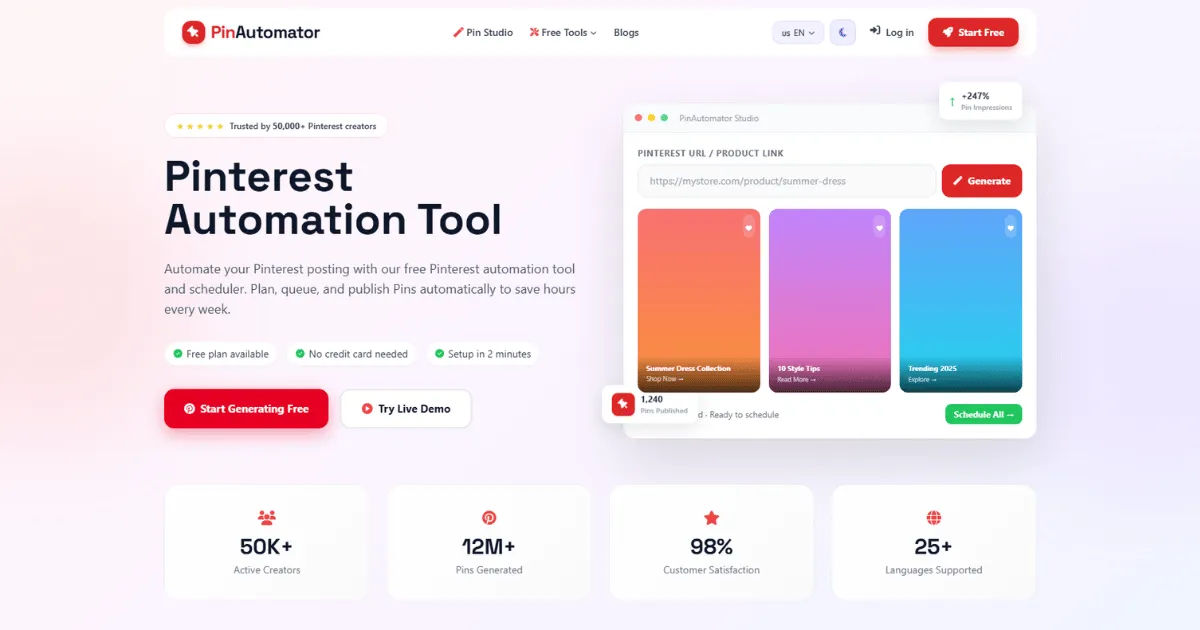
For businesses, bloggers, online stores, and creators, Pinterest can become a valuable source of long-term traffic. However, achieving consistent results requires regular publishing, careful planning, and the ability to reach audiences at the right times.
This is where Pinterest Automation becomes useful for pin scheduling. Instead of manually publishing every pin throughout the day or week, marketers can prepare content in advance and schedule it for specific dates and times. This approach makes Pinterest marketing more organized, predictable, and efficient.
Pin scheduling is especially helpful for people who manage multiple boards, publish large amounts of content, or operate several Pinterest accounts. Rather than logging in repeatedly to publish individual pins, they can create a content calendar and arrange posts ahead of time.
The real value of Pinterest Automation is not simply saving a few minutes each day. It can improve consistency, reduce repetitive work, support better content planning, and help marketers maintain a steady presence on the platform.
This comprehensive guide explains why Pinterest Automation is useful for pin scheduling, how scheduled publishing works, what benefits it offers, and how businesses can use it effectively without sacrificing content quality or audience engagement.
What Is Pinterest Automation?
Pinterest Automation refers to using software, tools, or organized workflows to simplify repetitive Pinterest marketing tasks. These tasks may include preparing pins, scheduling content, organizing publishing calendars, managing boards, and monitoring performance.
The goal is not necessarily to automate every part of Pinterest marketing. Instead, automation is most effective when it handles repetitive activities while marketers continue to make important creative and strategic decisions.
For example, a marketer may create ten original pins for a blog article. Instead of publishing all ten manually at random times, the marketer can organize them into a schedule. The content can then be distributed across relevant boards over a planned period.
This creates a more structured publishing system.
Pinterest Automation can also help businesses maintain consistency when their marketing teams are busy. If a person has several other responsibilities, it may be difficult to remember to publish new content every day. Scheduling tools can reduce this problem by allowing content to be prepared in advance.
The marketer still decides what to publish, where to publish it, and why the content matters. The automation system simply helps execute the plan more efficiently.
What Is Pin Scheduling?
Pin scheduling is the process of preparing Pinterest content ahead of time and selecting when it should be published.
Instead of creating a pin and immediately posting it, a user can choose a future date and time. The scheduled pin is then published according to the selected calendar.
For example, a small online clothing store may create a collection of seasonal pins at the beginning of the month. Rather than publishing every pin on the same day, the business can schedule different pins throughout the month.
A blogger might do something similar. If they publish five new articles, they can create multiple pins for each article and organize them across several weeks.
This approach creates a consistent content flow.
Scheduling is particularly valuable because Pinterest users do not all visit the platform at the same time. Different audiences have different browsing habits. A business targeting working professionals may find that its audience is more active during evenings or weekends, while another audience may engage more during daytime hours.
Scheduling allows marketers to experiment with publishing times and identify patterns in their analytics.
Why Is Pinterest Automation Useful for Pin Scheduling?
Pinterest Automation is useful for pin scheduling because it reduces repetitive manual work while creating a more consistent publishing system.
Without automation, marketers may need to remember when each pin should be posted. They might have to open Pinterest repeatedly, upload images, write descriptions, add links, select boards, and publish content manually.
This process can become difficult when a business manages hundreds of pieces of content.
Automation helps organize these tasks.
A marketer can prepare content in batches and schedule it for future publication. This means Pinterest activity does not have to depend on someone being available at a specific moment.
The benefits go beyond convenience. A well-planned scheduling system can support a broader Pinterest strategy by making it easier to distribute content consistently, test different publishing times, and maintain a steady presence.
For businesses that rely on Pinterest for website traffic, product discovery, or brand awareness, this consistency can be especially important.
It Saves Valuable Time
One of the biggest advantages of Pinterest Automation is time savings.
Manual pin publishing requires repeated actions. A user may need to upload an image, add a title, write a description, insert a destination link, select a board, and publish the pin.
Doing this once is simple.
Doing it dozens or hundreds of times can consume many hours.
Scheduling allows marketers to complete repetitive tasks in batches. Instead of working on Pinterest every day, they can dedicate a specific block of time to content preparation.
For example, a marketer could spend two hours on Monday preparing and scheduling content for the entire week. After that, the scheduled pins can continue publishing according to the plan.
This creates a more efficient workflow.
The time saved can then be used for activities that require human creativity and judgment. Marketers can focus on designing better visuals, researching keywords, writing stronger content, analyzing results, and developing new campaigns.
In this way, Pinterest Automation does not simply reduce workload. It can help shift attention from repetitive publishing tasks toward more valuable marketing activities.
It Helps Maintain a Consistent Publishing Schedule
Consistency is one of the most important elements of successful Pinterest marketing.
A business that publishes frequently for two weeks and then disappears for a month may struggle to build a reliable content presence. On the other hand, a business that follows a steady publishing schedule can maintain regular activity.
Pinterest Automation makes consistency easier to achieve.
Marketers can create a content calendar that outlines what will be published and when. Once the schedule is prepared, the publishing process becomes more predictable.
This is especially useful for small businesses.
A small business owner may not have time to create and publish content every day. However, they may have enough time once a week to prepare several pins.
Scheduling allows them to work according to their availability while maintaining a consistent publishing rhythm.
Consistency also makes campaign management easier. If a business plans a seasonal promotion, it can schedule supporting pins in advance instead of trying to manage everything at the last minute.
It Supports Batch Content Creation
Batch creation is a powerful productivity method for Pinterest marketing.
Instead of designing one pin at a time, marketers can create several related pins during one focused work session.
For example, a travel website may create ten pins about summer destinations. A food blogger may design a collection of recipe pins. An online retailer may prepare promotional content for a new product line.
Once the content is created, Pinterest Automation can help organize the pins into a publishing schedule.
This creates a simple workflow:
Create the content.
Optimize the content.
Organize the content.
Schedule the content.
Review performance.
Repeat the process.
Batch creation reduces the mental effort required to switch between different tasks. A marketer can focus entirely on graphic design during one session and content scheduling during another.
The result is often a more organized and productive marketing process.
It Reduces the Risk of Missed Publishing Opportunities
Manual scheduling can sometimes lead to missed opportunities.
A marketer may plan to publish a holiday-related pin on a specific date but forget to post it. A business may prepare a product promotion but fail to publish it at the right time.
Pinterest Automation can reduce these problems by allowing content to be scheduled in advance.
Seasonal campaigns are a good example.
Suppose a retailer wants to promote products for a major holiday. The marketing team can prepare the content ahead of time and schedule it for the campaign period.
This makes the campaign less dependent on daily manual action.
Scheduling can also help marketers manage important deadlines. If a campaign has multiple stages, pins can be organized according to the campaign timeline.
This creates greater control over the publishing process.
It Helps Marketers Reach Audiences at Better Times
Timing can influence how people discover and interact with content.
Although Pinterest content can continue generating visibility long after publication, the initial publishing period can still be important. Scheduling allows marketers to test different times and identify when their audiences are most responsive.
Pinterest Analytics can provide useful information about audience behavior and content performance.
For example, a marketer may notice that certain types of content perform better on weekends. Another business may discover that its audience engages more during evening hours.
With Pinterest Automation, marketers can adjust their publishing schedule based on these observations.
Instead of publishing whenever someone happens to be available, businesses can create a more intentional strategy.
However, marketers should avoid assuming that one universal "best time" works for every account. Audience behavior varies by industry, location, age group, and content type.
Testing is usually more useful than following generic advice.
It Makes Content Planning Easier
Effective Pinterest marketing requires more than creating attractive images.
A successful strategy often involves planning topics, keywords, boards, seasonal campaigns, product promotions, and blog content.
Pinterest Automation can support this planning process by giving marketers a structured way to organize upcoming posts.
A content calendar can include:
-
Pin topic
-
Pin design
-
Target keyword
-
Destination URL
-
Board
-
Publication date
-
Publication time
-
Campaign
-
Performance notes
This information can help marketers understand their content strategy as a whole.
Instead of seeing Pinterest as a collection of individual posts, they can view it as a long-term publishing system.
This makes it easier to identify gaps.
For example, a business may realize that it has been promoting products but rarely publishing educational content. A content calendar can reveal this imbalance and encourage a more diverse strategy.
It Helps Manage Multiple Content Categories
Many Pinterest accounts cover several related topics.
A home improvement website might publish content about kitchens, bathrooms, bedrooms, outdoor spaces, and interior design.
A fashion business might have content for casual clothing, formal outfits, accessories, seasonal trends, and styling tips.
Without proper organization, content publishing can become repetitive or unbalanced.
Pinterest Automation allows marketers to distribute different content categories across the schedule.
For example, Monday might focus on educational content, Wednesday on product inspiration, and Friday on seasonal ideas.
The exact schedule will depend on the business, but the principle remains the same.
A structured schedule helps ensure that one topic does not completely dominate the account.
It Can Support Multiple Pinterest Accounts
Businesses sometimes manage multiple Pinterest accounts for different brands, websites, or markets.
Managing each account manually can become extremely time-consuming.
Pinterest Automation can make the workflow more manageable by helping marketers organize content separately for different accounts.
For example, an agency may manage accounts for a fashion brand, a travel website, and a food blogger. Each account has different audiences and content strategies.
Scheduling tools can help the agency plan publishing activities without treating every account as one large collection of tasks.
However, managing multiple accounts requires careful organization.
Each account should have its own content strategy, branding, audience research, and publishing calendar. Automation should improve organization rather than encourage identical or low-quality content across every account.
It Helps Support Seasonal Marketing Campaigns
Seasonal content often performs best when it is planned early.
People frequently search for ideas before an event, holiday, season, or major occasion arrives. This means marketers may need to prepare and publish relevant content before the actual date.
Pinterest Automation can help businesses schedule seasonal campaigns ahead of time.
For example, a wedding website might prepare content months before the main wedding season. A retailer may begin publishing gift guides before the holiday shopping period. A travel company might promote summer destinations before summer begins.
Scheduling allows these campaigns to be organized in advance.
This reduces last-minute pressure and gives marketers more time to create high-quality content.
It also makes it possible to build a campaign gradually. Instead of publishing every promotional pin at once, marketers can spread content across an appropriate period.
It Improves Workflow for Marketing Teams
Pinterest marketing is often handled by more than one person.
A designer may create the pin.
A copywriter may write the description.
An SEO specialist may research keywords.
A marketing manager may review the content.
A social media specialist may schedule the final post.
Pinterest Automation can help connect these stages into a more organized workflow.
A team can prepare content in advance, review it, and place approved content into a publishing calendar.
This can reduce confusion about what has already been published and what still needs attention.
It also makes deadlines easier to manage.
When everyone can see the content schedule, team members have a clearer understanding of upcoming campaigns.
It Helps Reduce Repetitive Manual Tasks
Digital marketing includes many repetitive activities.
Uploading images, entering descriptions, selecting boards, checking publishing dates, and organizing content can all consume time.
Pinterest Automation is particularly useful when a task is repetitive but does not require constant human decision-making.
Once a marketer has already decided what content should be published and when, scheduling software can handle the routine execution.
This allows people to spend more time on strategic tasks.
The key is to automate the process without removing quality control.
Marketers should still review their content, links, descriptions, branding, and overall strategy.
Automation should reduce repetition, not eliminate responsibility.
It Can Help Businesses Publish More Strategically
Publishing more content does not automatically guarantee better results.
The goal should be strategic consistency rather than simply increasing volume.
Pinterest Automation can help marketers plan content around specific goals.
A business might want to:
-
Increase website traffic
-
Promote blog content
-
Generate product awareness
-
Support seasonal campaigns
-
Build brand visibility
-
Encourage product discovery
-
Reach a new audience
Each goal may require a different content strategy.
For example, a blog may focus on educational pins that drive readers to detailed articles. An e-commerce store may focus on product imagery and buying inspiration.
Scheduling allows these different content types to be organized according to business objectives.
This makes Pinterest activity more purposeful.
It Makes Long-Term Content Distribution Easier
One of the unique characteristics of Pinterest is that content can have a longer lifespan than posts on many other social platforms.
A useful pin may continue to be discovered through search and recommendations long after it is published.
This makes long-term content distribution valuable.
Pinterest Automation can help marketers plan how content will be distributed over time.
Instead of creating one pin for every piece of content and publishing it once, marketers can develop multiple original creative assets that highlight different aspects of the same resource.
For example, one blog article could inspire several pins with different visual designs and angles.
These pins can be scheduled across an appropriate period.
The goal should not be to flood Pinterest with duplicates. Instead, marketers should create genuinely useful and varied content that gives users different reasons to click.
It Helps Improve Content Organization
As a Pinterest account grows, organization becomes increasingly important.
A business may eventually have hundreds or thousands of pins.
Without a structured process, it can become difficult to remember which content has been published, which campaigns are active, and which topics need more attention.
Pinterest Automation can support better organization by providing a central scheduling workflow.
A content calendar can show upcoming posts and campaigns.
This makes it easier to plan ahead.
It also reduces the likelihood of accidental gaps in publishing.
For larger marketing teams, organized scheduling can improve accountability because team members can clearly see the content pipeline.
It Allows More Time for Analytics
A major advantage of reducing manual publishing work is having more time to analyze performance.
Pinterest marketing should not be based entirely on assumptions.
Marketers need to understand which content receives impressions, saves, clicks, and other valuable actions.
By spending less time manually publishing pins, marketers can spend more time reviewing data.
They can ask questions such as:
Which topics perform best?
Which designs receive more attention?
Which links generate traffic?
Which boards attract the most engagement?
Which seasonal campaigns perform well?
Which content should be improved?
These insights can then influence future scheduling decisions.
This creates a continuous improvement cycle.
Plan the content.
Schedule the content.
Measure the results.
Learn from the data.
Improve the next campaign.
Pinterest Automation can make this cycle easier to manage by reducing the amount of time spent on repetitive execution.
It Can Improve Productivity for Small Businesses
Small businesses often operate with limited resources.
One person may handle marketing, customer service, product management, and other responsibilities.
For such businesses, time is extremely valuable.
Pinterest Automation can help small teams maintain a professional content schedule without requiring someone to work on Pinterest every day.
A business owner might prepare content once or twice per week and schedule it ahead of time.
This approach can make Pinterest marketing more realistic and sustainable.
However, small businesses should focus on quality rather than trying to publish as much content as possible.
A smaller number of useful, relevant, well-designed pins can be more valuable than a large quantity of weak content.
Automation should support this principle.
It Supports Better Work-Life Balance
Marketing can become stressful when every task requires daily attention.
If a marketer feels that they must constantly check Pinterest to publish content, the platform can become another source of pressure.
Scheduling can create more flexibility.
Once content is properly prepared and scheduled, marketers can step away from the platform and focus on other responsibilities.
This does not mean ignoring the account completely.
Comments, messages, analytics, and campaign performance still need attention.
However, removing the need for constant manual publishing can create a healthier workflow.
This is especially valuable for freelancers, entrepreneurs, and small business owners who manage their own marketing.
It Helps Maintain Momentum During Busy Periods
Businesses often experience periods when marketing teams are extremely busy.
Product launches, sales campaigns, events, holidays, and major projects can consume significant time.
During these periods, social media publishing may be neglected.
Pinterest Automation can help maintain content momentum by allowing marketers to prepare content before a busy period begins.
For example, a business preparing for a major product launch can schedule regular educational and promotional pins in advance.
This means the Pinterest account can remain active while the team focuses on the launch itself.
Planning ahead can reduce stress and protect marketing consistency.
Pinterest Automation Does Not Replace Strategy
Although Pinterest Automation offers many benefits, it should not be viewed as a complete marketing strategy.
Automation can schedule content.
It cannot automatically understand every aspect of a target audience.
It cannot replace creative thinking.
It cannot guarantee that every pin will perform well.
It cannot substitute for understanding user intent.
Successful Pinterest marketing still requires human decisions.
Marketers must choose useful topics, create appealing visuals, write relevant descriptions, research keywords, select appropriate boards, and monitor performance.
Automation simply helps execute these decisions more efficiently.
The strongest approach combines technology with human judgment.
Quality Still Matters More Than Quantity
One common mistake is assuming that automation means publishing as much content as possible.
That approach can hurt a Pinterest strategy.
Publishing large amounts of repetitive, irrelevant, or low-quality content may create a poor user experience.
The purpose of scheduling should be to distribute valuable content consistently.
Each pin should have a clear purpose.
It should offer something useful to the audience and ideally lead to a relevant destination.
Marketers should prioritize original creative work, accurate links, useful descriptions, and strong visual communication.
Automation is most effective when it supports quality content rather than replacing it.
How to Build an Effective Pin Scheduling Strategy
An effective scheduling strategy starts with clear goals.
A marketer should first decide what Pinterest is expected to accomplish.
The goal might be website traffic, brand awareness, product discovery, or content promotion.
Once the goal is clear, the next step is understanding the audience.
Marketers should research what their target audience searches for and what types of content they find useful.
The next step is creating a content calendar.
The calendar should include topics, publishing dates, relevant boards, destination URLs, and campaign information.
Content should then be created and reviewed before being scheduled.
After publication, performance should be monitored.
This process creates a repeatable system.
Pinterest Automation can support each scheduling stage, but the strategy itself should come from thoughtful planning.
Best Practices for Using Pinterest Automation
The first best practice is to schedule content consistently.
A reliable publishing rhythm is generally better than unpredictable bursts of activity.
The second best practice is to create original and useful content.
Automation should never become an excuse for publishing repetitive material.
The third best practice is to review scheduled content.
Marketers should occasionally check upcoming pins to ensure that links still work, information remains accurate, and campaigns are still relevant.
The fourth best practice is to use analytics.
Performance data can help determine which topics, designs, and publishing patterns deserve more attention.
The fifth best practice is to keep content relevant to each board.
Pins should be organized logically so users can easily understand what type of content they will find.
Finally, marketers should remember that automation is a tool.
It should support a broader strategy rather than become the strategy itself.
Common Mistakes to Avoid
One common mistake is scheduling too much content without reviewing it.
Another is relying on identical content repeatedly.
Marketers should avoid creating a publishing system that feels robotic or disconnected from audience needs.
Another mistake is ignoring analytics.
Scheduling content without measuring results means missing valuable opportunities to improve.
Some businesses also focus entirely on quantity.
More pins do not automatically mean better results. Content quality, relevance, timing, and audience intent all matter.
Finally, marketers should avoid assuming that automation guarantees traffic.
Automation improves the publishing process, but results depend on many factors, including content quality, search relevance, visual appeal, competition, and audience interest.
How Automation and Human Creativity Work Together
The most effective Pinterest marketing strategies combine automation with creativity.
Automation handles repetitive scheduling tasks.
Humans handle strategy and creativity.
A marketer decides which topics matter.
A designer creates the visual concept.
A writer develops the messaging.
An SEO specialist researches relevant search terms.
The scheduling system then helps distribute the finished content.
This division of responsibilities creates a more efficient process.
It also ensures that automation does not remove the human element from marketing.
Pinterest is a discovery platform built around ideas and inspiration. Strong creative thinking remains essential.
Measuring the Success of a Scheduling Strategy
The success of Pinterest Automation should be measured using meaningful performance indicators.
Impressions can show how often content is displayed.
Saves can indicate that users find content valuable enough to keep.
Outbound clicks can show whether pins are successfully driving visitors to a website.
Engagement metrics can provide additional insight into audience response.
Businesses should connect these metrics to their actual goals.
For a blogger, website traffic may be the most important result.
For an online store, product page visits and conversions may matter more.
For a brand, visibility and audience growth may be the primary objectives.
The right measurement system depends on the business.
Is Pinterest Automation Useful for Every Business?
Pinterest Automation can be useful for many businesses, but its value depends on whether Pinterest is relevant to the target audience.
Businesses that sell visual products, publish educational content, or operate in highly discoverable categories may find Pinterest particularly valuable.
However, every business should evaluate its audience before investing heavily in the platform.
Automation is most useful when there is already a clear content strategy.
If a business has no content plan, simply scheduling more posts will not solve the underlying problem.
The best results usually come when automation is combined with audience research, strong content, and continuous optimization.
The Future of Pin Scheduling
As digital marketing becomes more competitive, efficiency will continue to matter.
Marketers are expected to manage more content across more platforms while maintaining high standards of quality.
Scheduling tools can help reduce repetitive work and make large content operations easier to manage.
At the same time, audiences are becoming more selective.
This means marketers cannot rely on automation alone.
The future of effective Pinterest marketing will likely involve a combination of smart planning, creative content, analytics, and efficient scheduling.
Businesses that understand their audiences and use automation responsibly can create systems that are both scalable and sustainable.
Conclusion
Pinterest Automation is useful for pin scheduling because it makes Pinterest marketing more organized, consistent, and manageable. Instead of manually publishing every piece of content at the exact moment it needs to go live, marketers can prepare content in advance and create a structured publishing calendar.
The biggest benefit is often time savings. By reducing repetitive publishing tasks, automation allows marketers to spend more time on creative work, audience research, keyword planning, analytics, and strategy.
Scheduling also supports consistency. A business can maintain a steady presence even when its marketing team is busy with other responsibilities. This is particularly valuable for small businesses, bloggers, agencies, and creators who may not have enough time to manage Pinterest manually every day.
Another major advantage is better planning. With a scheduling system, marketers can organize content around campaigns, seasons, product launches, blog topics, and business goals. This creates a more balanced and intentional approach to Pinterest marketing.
Pinterest Automation can also support long-term content distribution. Because Pinterest content may continue to be discovered over time, marketers can plan content calendars that extend beyond a single day or week. This makes it easier to build a sustainable publishing system rather than relying on occasional bursts of activity.
However, automation should always support quality rather than replace it. Successful Pinterest marketing still depends on useful content, attractive visuals, relevant keywords, accurate links, and a clear understanding of the audience. Simply scheduling a large amount of content will not guarantee success.
The most effective approach is to combine automation with human creativity and strategic decision-making. Marketers should decide what content deserves attention, create valuable pins, study performance data, and use scheduling technology to execute their plans efficiently.
When used responsibly, Pinterest Automation can turn pin scheduling from a repetitive daily task into a structured and manageable marketing process. It helps businesses save time, maintain consistency, organize campaigns, and focus more attention on the activities that truly drive long-term growth.
For marketers who want to build a sustainable Pinterest presence, scheduling is not just a convenience. It can become an important part of a broader content strategy that keeps publishing organized, reduces workload, and creates more opportunities to reach the right audience at the right time.
