
A uniform is more than a team’s visual identity. In organized American football, it must also meet rules covering safety, appearance, numbering, equipment, and league requirements. Whether a team is ordering new jerseys for a school season, community league, or competitive program, understanding the rules before placing an order can prevent expensive changes later.
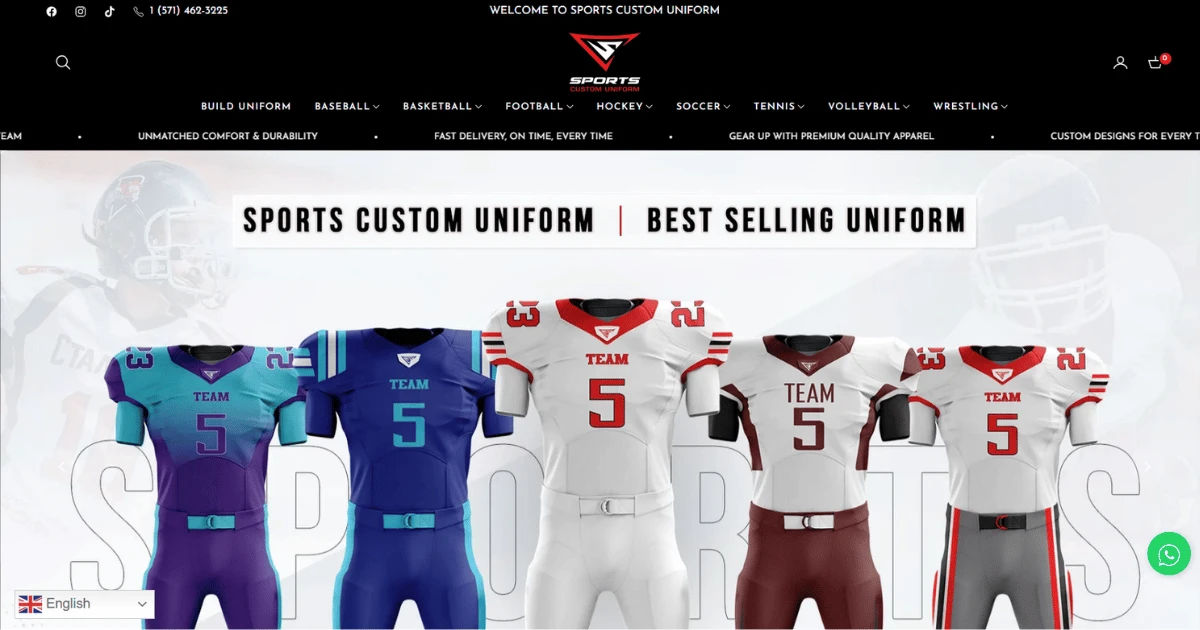
A well-designed custom football uniform should look professional while also meeting the standards of the organization in which the team competes.The exact requirements can differ significantly between professional, college, high school, youth, and recreational football.
The NFL has its own regulations, while NCAA football follows college rules, and high school programs generally follow NFHS rules along with state athletic association requirements. Youth and amateur leagues may establish additional rules about colors, logos, equipment, and jersey designs.
For that reason, a custom football uniform should never be designed only according to personal preference. Teams should first identify the governing organization and review its current uniform regulations. A design that is acceptable in one league may require changes in another.
Why Uniform Rules Matter
Uniform regulations serve several purposes. The most important is player identification. Officials, teammates, coaches, and spectators need to identify players quickly during a fast-moving game.
Numbers are especially important because they help officials recognize players and apply rules correctly. A uniform also distinguishes one team from another and makes it easier to follow plays from the sideline or stands.
Safety is another major concern. Uniforms must work properly with required protective equipment and should not create unnecessary risks. Loose or unsuitable clothing can interfere with movement, while inappropriate materials or accessories may create problems during physical contact.
Finally, uniform rules promote consistency. When every player follows the same basic requirements, the team looks organized and officials can manage the game more efficiently.
Rules Can Vary by Football Organization
There is no single worldwide rulebook for every football uniform. Before designing apparel, determine which rules apply to your team.
NFL Uniform Requirements
Professional football has detailed requirements governing jerseys, pants, socks, colors, player numbers, names, logos, and equipment. NFL teams also have strict policies concerning approved designs and equipment.
A professional team cannot simply create a new design and use it in an official game without following league procedures. Even seemingly small changes can be subject to approval.
For teams outside professional football, NFL requirements can provide useful design inspiration, but they should not be treated as the rules for every competition.
NCAA Football Requirements
College football follows NCAA rules, which include specific provisions for jersey numbers, contrasting colors, and uniform components. Players must wear uniforms that comply with applicable NCAA requirements.
College programs should check the current NCAA football rules before ordering new apparel because regulations can change. Athletic departments may also have institutional policies that go beyond the basic competition rules.
High School Football Requirements
High school football in the United States commonly follows NFHS rules, although individual states and athletic associations can establish additional requirements.
This is especially important because a design approved for one state or association may not automatically meet the requirements somewhere else.
A school should therefore consult its athletic director, state association, or applicable rulebook before finalizing a custom football uniform.
Youth and Recreational Football
Youth leagues often have more flexibility, but they can still establish specific requirements. Some leagues require particular jersey colors, number sizes, or uniform styles.
Others may restrict certain accessories or require uniforms to match approved team colors. Youth organizations may also have additional safety rules because players are younger and may use different protective equipment.
Always ask the league for its current uniform specifications before production.
Jersey Number Rules
One of the most important uniform requirements is the player number.
Numbers must generally be clearly visible and easy for officials to identify. Their placement and size can be regulated depending on the competition.
For example, rules may address the number's location on the front and back of the jersey, its contrast with the jersey background, and whether additional numbers are permitted in particular locations.
A team should not assume that an attractive number design will automatically be legal. Special fonts, decorative effects, patterns, gradients, or unusual placements can sometimes reduce visibility.
Choose Clear, Readable Numbers
The safest approach is to use a simple number style with strong contrast.
A number should remain easy to read from a reasonable distance. Avoid placing numbers over busy patterns or using colors that blend into the jersey.
If the league specifies minimum dimensions or particular placement requirements, those measurements should be followed during the design stage rather than corrected after production.
Color and Contrast Requirements
Uniform colors are another important consideration.
When two teams play each other, their uniforms need to be distinguishable. Some competitions have procedures for determining which team wears light or dark jerseys, while others provide specific instructions for home and away uniforms.
A team may therefore need both a primary and alternate jersey.
Home and Away Uniforms
Many organized teams maintain two uniform sets. One may use the team's primary color, while the other provides enough contrast for games against opponents with similar colors.
For example, if a team's regular jersey is dark blue, an alternate white or light-colored jersey can make it easier to distinguish players when required.
When creating a custom football uniform, teams should consider both versions at the beginning of the design process. This allows the colors, numbers, names, and logos to remain consistent between sets.
Names, Logos, and Team Branding
Team names, player names, school names, mascots, and logos are common features of football uniforms. However, leagues can regulate where these elements appear.
A league may restrict certain markings or require particular areas to remain clear. School and college teams may also have institutional branding rules.
Professional and collegiate organizations can have especially detailed policies concerning trademarks and official logos.
Before adding a large graphic to the jersey, confirm that it does not interfere with required numbers or other mandatory markings.
Sponsor Logos
Recreational and amateur teams sometimes include sponsor logos to help fund their programs.
Sponsor placement should be checked against league rules. Some organizations allow advertising in certain areas, while others restrict or prohibit it.
A sponsor graphic should never make a player's number difficult to see. It should also be positioned consistently across the team unless the league permits individual variations.
Material and Construction Requirements
A uniform must be suitable for athletic activity.
Football involves running, tackling, blocking, and frequent physical contact. Jerseys therefore need to provide adequate freedom of movement and should remain secure during play.
Modern football jerseys are commonly manufactured from lightweight synthetic materials that can manage moisture and withstand repeated washing.
The material itself may not be the only consideration. Seams, stitching, panels, and decorative elements should also be designed for active use.
Proper Fit Matters
A uniform that is too loose may interfere with equipment or movement. A uniform that is too tight can restrict mobility and become uncomfortable.
Players should have enough room to move naturally while wearing required protective equipment.
The correct fit also depends on the player's position and equipment. A lineman wearing substantial shoulder protection may require a different fit from a player using less bulky equipment.
Interaction With Protective Equipment
Football uniforms are worn together with helmets, shoulder pads, pants, socks, and other required equipment.
A jersey must fit appropriately over the player's protective gear. It should not prevent the equipment from functioning correctly.
Teams should therefore test sample uniforms with actual equipment before ordering large quantities.
This is one reason ordering a sample size or prototype can be valuable. A jersey that looks perfect on a computer screen may fit differently when worn over shoulder pads.
Sleeves and Accessories
Uniform rules can also address sleeves, undergarments, towels, socks, gloves, and other visible equipment.
A player may be required to keep certain items within specified color or design standards.
For example, an undershirt or sleeve that extends beyond the jersey may be subject to team or league color requirements.
Teams should create a complete appearance policy rather than considering only the jersey. Consistency across the entire uniform creates a professional appearance and reduces the possibility of violations.
Socks and Pants
Football uniforms usually include more than a jersey.
Pants and socks can also be regulated, particularly when their colors or designs affect team identification.
Some organizations specify sock colors or require players to wear matching components. Others have detailed requirements regarding visible portions of undergarments.
A team ordering a custom football uniform should therefore consider the jersey, pants, socks, and other visible elements as one complete design.
Uniform Safety Considerations
Safety should always come before appearance.
Uniform components should not contain unnecessary hard objects, sharp decorations, or loose pieces that could injure players.
Decorative elements should be securely attached, and materials should be appropriate for repeated physical contact.
Uniforms should also be compatible with required protective equipment. If a design causes discomfort or prevents equipment from fitting correctly, it should be changed even if the design technically meets appearance requirements.
Customization Does Not Mean Unlimited Freedom
The word "custom" can sometimes create the impression that anything is possible.
In organized football, that is not the case.
Teams can usually customize colors, graphics, names, numbers, patterns, and other design elements, but those choices must remain within the rules of the competition.
For example, a team may want an extremely elaborate jersey pattern. If the pattern makes the numbers difficult to recognize, the design may need to be simplified.
Good customization balances creativity with practicality.
How to Check Compliance Before Ordering
The best time to check uniform compliance is before production.
Start by identifying the governing organization. Find the current rulebook or contact the league office, athletic director, or competition administrator.
Then make a list of the requirements affecting uniforms.
Check the following areas:
-
Jersey number placement
-
Number size and visibility
-
Required color contrast
-
Home and away requirements
-
Team and player identification
-
Logo restrictions
-
Sponsor requirements
-
Sock and pants rules
-
Sleeve and undershirt rules
-
Equipment compatibility
-
Any state, school, or league-specific regulations
Once these requirements are confirmed, provide them to the uniform manufacturer.
A professional supplier can then build the design around the required specifications rather than creating a design that later needs to be changed.
Common Mistakes to Avoid
One common mistake is copying a design from another team without checking whether it is permitted by the current league.
Another mistake is focusing heavily on graphics while overlooking number visibility.
Teams also sometimes order uniforms before confirming their league's rules. This can result in additional costs if the jerseys have to be redesigned or replaced.
Poor sizing is another frequent problem. A uniform may look attractive but become uncomfortable when worn with pads.
Finally, teams should avoid relying on outdated information. Sports regulations can change from season to season.
Questions to Ask Your Uniform Supplier
Before approving production, ask the supplier several practical questions.
Can they provide a sample? What fabric will be used? How will numbers be applied? Can the uniform withstand frequent washing? Does the supplier understand the competition's specifications?
It is also useful to ask whether the supplier can make corrections before the complete order is manufactured.
A reliable manufacturer should be willing to review the design and discuss measurements, placement, materials, and production details.
Designing for Performance and Appearance
The best uniform combines function with team identity.
A strong design uses readable numbers, appropriate colors, comfortable materials, and durable construction. It can still include creative graphics and branding without sacrificing clarity.
Teams should think about how the uniform will look under stadium lights, on television or video, in photographs, and from the stands.
A simple, high-contrast design is often more effective than an overcrowded one.
When planning a custom football uniform, consider durability as well as appearance. Football uniforms may be worn throughout an entire season and washed repeatedly. High-quality materials and strong construction can help the uniform maintain its appearance.
Final Checklist Before Production
Before placing the final order, review the complete design one more time.
Confirm every player's number and spelling. Check jersey colors against the official team colors. Verify the location of logos and sponsor markings.
Measure players carefully and account for protective equipment when determining jersey sizes.
Most importantly, have the final design reviewed against the current rules of the specific competition.
A few minutes spent checking requirements can prevent an entire uniform order from becoming unusable.
Conclusion
Creating a football uniform involves much more than choosing colors and adding a team logo. Organized football has rules designed to support player identification, safety, fair competition, and consistency. Those rules can cover numbers, colors, logos, names, socks, pants, sleeves, equipment, and other visible parts of the uniform.
The exact requirements depend on the level of competition. NFL, NCAA, high school, youth, and recreational organizations can have different standards. State associations and individual leagues may also introduce additional requirements.
For this reason, teams should always check the current rules that apply to their specific competition before approving a design. A manufacturer can help with construction and customization, but the team remains responsible for making sure its uniforms meet the applicable regulations.
A successful custom football uniform should be comfortable enough for intense physical activity, durable enough for an entire season, and clear enough for players and officials to identify quickly. It should also represent the team's identity through thoughtful colors, graphics, and branding.
The smartest approach is to start with compliance and build creativity around it. Confirm the rules first, create a practical design, test the fit with protective equipment, verify every player's information, and approve a sample before ordering the complete set.
When these steps are followed, teams can achieve a professional appearance without compromising functionality or league requirements. Most importantly, players can step onto the field knowing their uniforms have been designed not only to look good but also to support the demands of the game.
