
Installing new countertops is an important part of improving a kitchen. Homeowners often focus on countertop materials, colors, patterns, and finishes, but appliances are equally important during the planning process. Refrigerators, dishwashers, cooktops, ovens, and sinks can all influence how countertops are measured, cut, positioned, and installed.The answer is yes. Appliances can significantly affect countertop installation Jacksonville FL, because their dimensions, placement, weight, and installation requirements help determine the countertop's final design and fit. 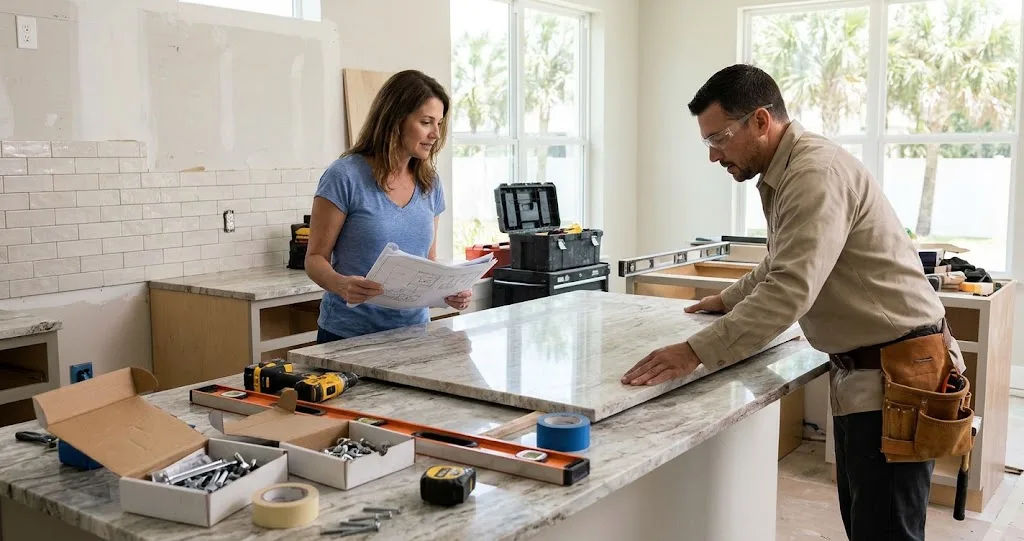 Even a small measurement error can create problems with appliance openings, countertop edges, and surrounding cabinets.
Understanding the relationship between appliances and countertops helps homeowners avoid expensive mistakes. Proper planning also ensures that appliances function correctly while creating a clean, attractive, and practical kitchen.
This comprehensive guide explains how different appliances affect countertop installation, what homeowners should prepare before installation, and how professional installers coordinate appliances with countertop materials.
1. Why Appliances Matter During Countertop Installation
Appliances are not separate from kitchen design. They work together with cabinets, countertops, plumbing, and electrical connections to create a functional space.
When homeowners replace existing countertops, appliance measurements must be considered before fabrication begins. New countertops may have different thicknesses, overhangs, or edge profiles that affect how appliances fit.
For example, a dishwasher usually fits beneath the countertop. If the new countertop is thicker than the previous one, the available opening may become smaller. This can create installation difficulties.
Similarly, a cooktop requires a precisely measured opening. If the countertop cutout is too small, the appliance may not fit. If it is too large, the cooktop may not receive proper support.
Professional countertop installers consider these details before cutting or positioning the material.
Appliance Measurements Affect Countertop Design
Every kitchen appliance has specific dimensions and installation requirements. These measurements influence the countertop layout.
Important measurements include:
-
Appliance width and height.
-
Required installation depth.
-
Manufacturer-recommended clearances.
-
Countertop thickness.
-
Cabinet opening dimensions.
-
Ventilation requirements.
-
Electrical and plumbing locations.
Accurate measurements help prevent fitting problems and reduce the possibility of additional modifications.
Proper Planning Prevents Installation Delays
When appliance measurements are available before countertop fabrication, installers can prepare accurate cutouts and make adjustments to the design.
Without proper planning, installers may discover that a cooktop opening is incorrectly positioned or that a dishwasher cannot fit beneath the new countertop.
These problems can delay the project and increase labor costs.
2. How Different Kitchen Appliances Affect Countertop Installation
Different appliances influence countertop installation in different ways. Some require specific openings, while others affect available workspace, countertop support, or surrounding clearances.
Understanding these requirements makes kitchen renovation planning easier.
Refrigerators and Countertop Placement
Refrigerators generally do not sit directly on kitchen countertops, but their placement can affect the surrounding countertop layout.
A refrigerator needs enough clearance for its doors to open completely. Its position may also influence nearby countertop sections and cabinet arrangements.
Homeowners should consider the following factors:
-
Refrigerator width and depth.
-
Door-opening direction.
-
Clearance between the refrigerator and nearby cabinets.
-
Space required for ventilation.
-
Location of adjacent countertop sections.
Built-in refrigerators require especially careful planning because they often have specific cabinet and ventilation requirements.
For example, a refrigerator positioned too close to a countertop corner may prevent its door from opening fully. This can make accessing drawers and shelves difficult.
A professional installer should review the refrigerator's location when evaluating the overall kitchen layout.
Dishwashers and Countertop Height
Dishwashers have a direct relationship with countertops because they are commonly installed beneath them.
The countertop sits above the dishwasher, while the surrounding cabinets help create the available opening.
During countertop installation Jacksonville FL, installers must confirm that the dishwasher has sufficient vertical clearance.
Countertop thickness is especially important. A thick stone countertop can reduce the space available for the appliance.
Other important considerations include:
-
Dishwasher height.
-
Cabinet opening measurements.
-
Countertop thickness.
-
Mounting bracket requirements.
-
Door-opening clearance.
-
Water supply and drainage connections.
Some dishwashers are attached to the underside of the countertop using mounting brackets. Certain stone countertops require alternative mounting methods because drilling directly into the material may create damage.
Installers may use approved side-mounting brackets or other manufacturer-compatible hardware.
Homeowners should also make sure that the dishwasher can be removed for future maintenance without damaging the countertop.
Cooktops and Countertop Cutouts
Cooktops have one of the most important relationships with countertop installation.
Unlike freestanding ranges, built-in cooktops are installed directly into prepared countertop openings.
The opening must match the manufacturer's specifications.
A cutout that is too small can prevent the appliance from fitting correctly. An oversized opening can create insufficient support around the cooktop.
Before cutting the countertop, installers should confirm:
-
The exact cooktop model.
-
The required cutout width and depth.
-
The appliance's overall dimensions.
-
Required clearance from surrounding walls.
-
Ventilation requirements.
-
Electrical or gas connection locations.
Material selection also matters.
Granite, quartz, and other countertop materials must be cut using appropriate equipment and techniques. Installers should also consider the strength of the material around the opening.
Proper support is essential, particularly when the countertop contains large cutouts or narrow sections.
Built-In Ovens and Countertop Coordination
Built-in ovens are generally installed inside cabinets, but their location affects the overall kitchen layout.
For example, an oven positioned beneath a cooktop may require specific cabinet dimensions and ventilation arrangements.
The countertop opening must also align with the cooktop specifications if both appliances are installed together.
Homeowners should confirm the dimensions of both appliances before the countertop is fabricated.
This is particularly important when replacing older appliances with newer models that have different dimensions.
3. Does Appliance Weight Affect Countertop Installation?
Yes. Appliance weight can influence countertop support requirements, especially when heavy appliances are installed near or directly within countertop openings.
Most standard countertop surfaces are designed to support normal kitchen activities. However, additional structural considerations may be necessary when heavy equipment is installed.
Heavy Appliances Require Proper Support
Built-in cooktops, specialty kitchen equipment, and certain commercial-style appliances may place additional demands on surrounding cabinetry.
The countertop itself must also have adequate support.
Installers evaluate:
-
Cabinet strength.
-
Countertop thickness.
-
Support placement.
-
Cutout dimensions.
-
Material characteristics.
-
Weight distribution.
For example, a large cooktop opening may leave narrow countertop sections on either side. These areas may need additional support depending on the material and design.
Why Cabinet Stability Matters
Countertops depend on properly installed cabinets for support.
If cabinets are uneven, damaged, or unstable, the countertop may not sit correctly.
Heavy appliances can make these problems more noticeable.
Before installation begins, professionals should inspect the cabinets and confirm that they can support the selected countertop material and appliance arrangement.
4. How Countertop Materials Affect Appliance Installation
Not all countertop materials behave the same way. Their thickness, strength, flexibility, and fabrication requirements can influence appliance compatibility.
Homeowners should select materials that work with their kitchen appliances and cabinet design.
Granite Countertops
Granite is a natural stone known for its durability and distinctive appearance.
It is commonly used in kitchens because it can withstand normal kitchen activities and provides a solid surface for cooking and food preparation.
However, granite requires professional cutting and handling.
Cooktop openings, sink cutouts, and appliance-related modifications must be measured accurately.
Granite countertops are also relatively heavy, so the supporting cabinets must be stable and properly installed.
Quartz Countertops
Quartz countertops are popular because they offer consistent patterns and a wide range of colors.
They are engineered using natural quartz and other materials.
Although quartz is durable, it still requires careful handling during fabrication and installation.
Appliance openings must follow manufacturer specifications, and installers should consider the countertop manufacturer's requirements for heat exposure.
For example, cooktops should be installed with appropriate clearances and according to the appliance manufacturer's instructions.
Marble Countertops
Marble provides a classic appearance that works well in traditional and contemporary kitchens.
However, marble is more susceptible to scratching, staining, and certain types of damage than some other countertop materials.
Appliance installation should be handled carefully to prevent chips or cracks around cutouts.
Homeowners should also consider heat protection and appropriate maintenance requirements.
Laminate Countertops
Laminate countertops are often selected because they are affordable and available in many colors and designs.
They are generally lighter than natural stone.
However, exposed edges around sinks and cooktops must be properly finished and protected according to the product specifications.
Incorrectly sized appliance openings can expose the underlying material to moisture and damage.
5. What Should Homeowners Do Before Countertop Installation?
Preparing appliances before installation can prevent unnecessary complications.
Homeowners should communicate their appliance choices and kitchen plans to the installation company before fabrication begins.
The following steps can make the process more organized.
Confirm Appliance Models
One of the most important preparation steps is identifying the exact appliance models.
Do not rely only on general measurements or estimates.
Different models from the same manufacturer may have slightly different dimensions.
Collect the installation manuals and specification sheets for each appliance.
These documents usually provide the information required for accurate countertop planning.
Measure Existing Appliances
Homeowners should measure appliances that will remain in the kitchen.
Important measurements include width, depth, height, and installation clearance.
For built-in appliances, the cabinet opening should also be measured.
If a new appliance will replace an older one, compare their dimensions before deciding on the countertop layout.
Remove Appliances When Necessary
Some appliances may need to be disconnected or moved before countertop installation.
Dishwashers, cooktops, and sinks may require professional disconnection.
Gas and electrical appliances should be handled by qualified professionals.
Removing appliances provides installers with better access to the work area and helps them inspect the cabinets underneath.
Inspect Cabinets and Connections
Before installation, inspect the cabinets for signs of damage.
Look for loose fasteners, water damage, uneven surfaces, and weakened cabinet sections.
Plumbing and electrical connections should also be checked.
Addressing these issues beforehand can prevent installation delays.
6. How Appliances Affect Countertop Measurements and Cutouts
Accurate measurements are essential for achieving a professional result.
Appliance openings must be planned before countertop fabrication because many countertop materials cannot be modified easily after installation.
Sink Openings
Kitchen sinks require carefully measured countertop openings.
The opening depends on the sink model, mounting style, and manufacturer's installation instructions.
Undermount sinks require special attention because they are attached beneath the countertop.
The exposed countertop edge must be properly finished to create a clean appearance and protect the material.
Cooktop Openings
Cooktop openings must match the exact specifications of the selected appliance.
Installers should consider the location of nearby walls, backsplashes, cabinets, and ventilation equipment.
They must also maintain the required distance between the cooktop and surrounding materials.
Faucet and Accessory Holes
Some kitchen countertops require additional holes for faucets, soap dispensers, filtered water taps, or other accessories.
These locations should be confirmed before fabrication.
The position of the sink and surrounding appliances can influence where these holes should be placed.
Proper planning helps prevent overcrowding and improves everyday convenience.
7. Can Installing New Appliances Require Countertop Changes?
Yes. Replacing existing appliances can sometimes require adjustments to the countertop.
This is particularly common when homeowners upgrade to larger or differently designed appliances.
Replacing a Standard Range With a Cooktop
A freestanding range generally does not require a countertop cutout.
However, replacing it with a built-in cooktop may require a new opening.
The countertop may need professional modification or replacement, depending on the existing layout and available material.
Upgrading to a Larger Sink
A larger sink may require an expanded countertop opening.
Before making any changes, installers should check whether the existing countertop has enough material around the proposed opening.
Some modifications may weaken narrow countertop sections.
Installing a New Dishwasher
A replacement dishwasher may have different height or mounting requirements.
If the new model is taller, the countertop or cabinet arrangement may need adjustment.
Homeowners should verify the available clearance before purchasing the appliance.
8. Common Appliance-Related Countertop Installation Mistakes
Avoiding common mistakes can save homeowners time and money.
Many installation problems happen because appliances are selected or measured after countertop fabrication has already started.
Choosing Appliances Too Late
Waiting until the countertop is fabricated to select appliances can create unnecessary complications.
The appliance specifications should be available before installers finalize their measurements.
Using Incorrect Measurements
Measurements taken from general product descriptions may not provide enough information.
Always use the manufacturer's installation specifications.
Even a small measurement difference can affect how a built-in appliance fits.
Ignoring Ventilation Requirements
Appliances such as cooktops, ovens, and refrigerators require appropriate ventilation.
Blocking ventilation openings can affect performance and may create safety concerns.
Homeowners should follow the appliance manufacturer's clearance requirements.
Forgetting Future Appliance Replacement
A countertop should not only accommodate current appliances.
It should also allow reasonable access for future maintenance and replacement.
For example, a dishwasher should be removable without damaging the countertop or surrounding cabinets.
Overlooking Countertop Overhangs
Countertop overhangs can affect appliance doors, drawers, and nearby walkways.
An overhang that extends too far may interfere with a dishwasher door or reduce available clearance.
Professional planning helps maintain comfortable spacing.
9. Why Professional Installation Makes a Difference
Professional installation helps ensure that countertops and appliances work together correctly.
Experienced installers understand the importance of accurate measurements, material handling, cabinet preparation, and appliance clearances.
They can also identify potential problems before fabrication begins.
Accurate Measurements and Planning
Professional installers evaluate the kitchen layout and review appliance specifications.
They identify the necessary cutouts and determine how the countertop should fit around cabinets and appliances.
This reduces the possibility of expensive corrections.
Proper Equipment and Fabrication
Countertop materials require specialized tools for cutting, polishing, and finishing.
Professional fabricators use suitable equipment to create clean openings and finished edges.
This is especially important around cooktops and sinks.
Safe Handling and Installation
Heavy countertop materials can be difficult to transport and position.
Professional installers understand how to handle these materials while protecting cabinets, appliances, walls, and floors.
Better Long-Term Results
Proper installation improves countertop stability and appliance functionality.
It also helps reduce problems such as uneven surfaces, damaged edges, and fitting difficulties.
When planning countertop installation Jacksonville FL, homeowners should choose an experienced contractor who understands both countertop fabrication and appliance requirements.
10. What Questions Should You Ask Your Countertop Installer?
Before starting a kitchen countertop project, homeowners should discuss appliance-related details with their installer.
Asking the right questions helps clarify responsibilities and prevents misunderstandings.
Consider asking:
1. Do you need appliance specifications before fabrication?
The installer should explain which measurements and manufacturer documents are necessary.
2. Will you measure the cooktop and sink openings?
Confirm that all required openings will be measured according to the actual appliance models.
3. Can my existing dishwasher fit beneath the new countertop?
This question is especially important when upgrading to thicker countertop materials.
4. Will my cabinets support the selected countertop?
The installer should evaluate cabinet stability and determine whether additional support is necessary.
5. Who handles appliance disconnection and reconnection?
Clarify whether the countertop company coordinates these services or whether separate professionals are required.
6. How will you protect my appliances during installation?
Discuss how the work area, appliances, cabinets, and flooring will be protected.
7. Can future appliance replacements be accommodated?
Ask whether the design provides practical access for maintenance and replacement.
These conversations help establish clear expectations and make the renovation process smoother.
11. Final Inspection After Countertop and Appliance Installation
Once the countertop has been installed and the appliances have been reconnected, a thorough inspection is important.
Homeowners should check the entire kitchen before considering the project complete.
Check Countertop Alignment
Look for uneven sections, visible gaps, or areas that do not sit correctly against cabinets and walls.
Countertop seams should be properly finished.
Test Appliance Functionality
Check that the dishwasher opens and closes correctly.
Make sure the cooktop sits securely and that the refrigerator doors have enough clearance.
Built-in appliances should operate according to their manufacturer's instructions.
Inspect Sink and Plumbing Connections
Turn on the faucet and check for leaks around the sink and plumbing connections.
Run water through the drain and inspect the cabinet underneath.
Review Countertop Edges and Cutouts
Inspect the edges around sinks, cooktops, and other openings.
Look for visible chips, cracks, or unfinished areas.
Confirm Maintenance Instructions
Ask the installer how to clean and maintain the countertop material.
Granite, quartz, marble, and laminate have different care requirements.
Following the correct maintenance recommendations helps preserve the countertop's appearance and performance.
Conclusion
Appliances play an important role in countertop installation because they influence measurements, countertop openings, cabinet clearances, material selection, and installation requirements. Although appliances such as refrigerators may not sit directly on countertops, their placement can still affect the overall kitchen layout.
Dishwashers, cooktops, sinks, and built-in ovens require especially careful coordination. Their dimensions and installation specifications must be considered before countertop fabrication begins. Even a small measurement error can lead to fitting problems, additional expenses, or unnecessary project delays.
Homeowners should select their appliances early, collect manufacturer specification sheets, inspect existing cabinets, and discuss installation requirements with their countertop contractor. They should also consider the weight and characteristics of their chosen countertop material, along with ventilation, plumbing, electrical connections, and future appliance replacement.
Professional planning makes a significant difference in achieving a kitchen that looks attractive and functions properly. Experienced installers can identify potential issues, prepare accurate cutouts, and ensure that appliances fit comfortably within the finished design.
Whether you are remodeling an older kitchen or building a completely new one, coordinating appliances and countertops should always be part of the planning process. A well-organized countertop installation Jacksonville FL project can improve your kitchen's appearance, functionality, convenience, and long-term value.
The most important lesson is simple: never treat countertops and appliances as separate renovation decisions. When both are planned together, homeowners can avoid common installation mistakes and enjoy a more practical, attractive, and reliable kitchen for years to come.
