
Website AEO and GEO Checker is becoming an essential concept for anyone learning how modern search systems evaluate page structure, content clarity, and user experience.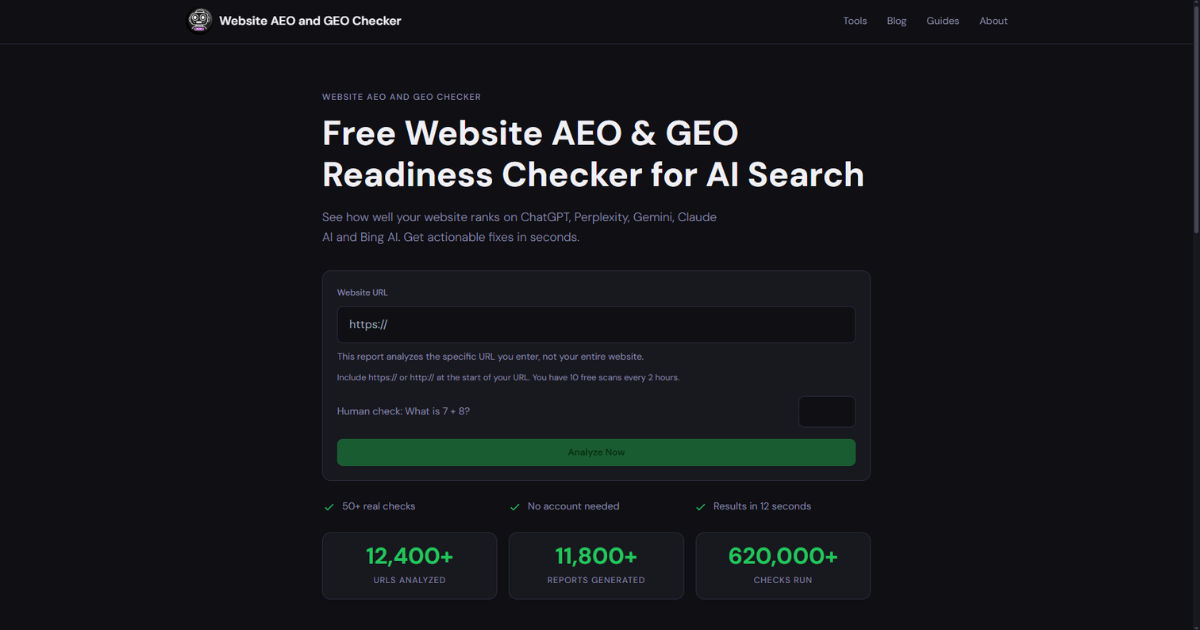
In this guide, we will explore how website AEO page layout helps improve visibility, user engagement, and search engine understanding. From beginners to intermediate learners, understanding layout design is key to building pages that perform well in answer engines and geo-based discovery systems.
Throughout this article, we will repeatedly refer to Website AEO and GEO Checker as a practical way to understand how structured page layout impacts optimization, ranking signals, and user satisfaction. By the end, you will clearly understand how layout decisions directly influence performance.
Website AEO Page Layout
Website AEO page layout refers to how content is structured, arranged, and visually organized on a webpage so that answer engines can easily interpret it. A strong layout helps both users and search engines understand what the page is about within seconds.
Website AEO and GEO Checker tools are often used to analyze whether a page layout follows best practices for answer engine optimization and geographic relevance.
A good layout includes clear headings, logical sections, readable paragraphs, and structured content blocks. Without these, even high-quality content may not perform well in search results.
Website AEO and GEO Checker systems evaluate whether a page layout supports clarity, intent matching, and content hierarchy.
Why Page Layout Matters for AEO Performance
Page layout is not just about design; it is about communication. Search engines and answer systems rely on structure to interpret meaning.
When a page is properly structured, it becomes easier for systems like Website AEO and GEO Checker to extract relevant answers and display them in featured results.
Poor layout leads to confusion, where content exists but is not properly recognized. A strong layout ensures that each section serves a clear purpose.
Website AEO and GEO Checker also evaluate whether layout elements match user intent, especially in location-based or question-based searches.
A well-designed layout increases dwell time, reduces bounce rate, and improves overall engagement metrics.
Core Elements of an Effective AEO Page Layout
A strong AEO page layout includes several essential components that work together.
Clear Headings Structure
Headings organize content into readable sections. Users should be able to scan the page easily.
Website AEO and GEO Checker tools often prioritize pages with structured heading hierarchy because they improve readability.
Logical Content Flow
Information should flow from general to specific. This helps readers understand the topic step by step.
Website AEO and GEO Checker systems reward pages that maintain a natural progression of ideas.
Readable Paragraphs
Short paragraphs improve comprehension. Long blocks of text reduce engagement.
Using Website AEO and GEO Checker insights, content creators can adjust paragraph length for better performance.
Visual Separation of Ideas
Spacing, breaks, and section division help users process information more effectively.
Website AEO and GEO Checker analysis often highlights whether content is visually structured for clarity.
How Content Hierarchy Improves AEO Understanding
Content hierarchy is one of the most important parts of page layout. It tells search engines what is important and what is supporting information.
Primary headings represent main topics, while subheadings break down supporting ideas.
Website AEO and GEO Checker evaluates whether hierarchy is correctly applied across the page.
Without proper hierarchy, search engines may misinterpret content relevance.
Website AEO and GEO Checker ensures that pages with strong hierarchy get better indexing and visibility in answer-based systems.
UX Design Signals in AEO Page Layout
User experience (UX) plays a major role in AEO success. Search engines now analyze how users interact with page layout.
Readability and Engagement
If users stay longer on a page, it signals quality.
Website AEO and GEO Checker tools measure engagement patterns to evaluate layout effectiveness.
Navigation Ease
Users should find information quickly without scrolling excessively.
Website AEO and GEO Checker identifies whether layout supports intuitive navigation.
Visual Balance
Balanced spacing, headings, and content blocks improve reading comfort.
Website AEO and GEO Checker highlights layout imbalance issues that may reduce performance.
Technical SEO and AEO Layout Alignment
Technical SEO works together with page layout to improve discoverability.
Structured Data Usage
Structured data helps search engines understand page content more accurately.
Website AEO and GEO Checker evaluates whether structured data matches layout elements.
Clean HTML Structure
Although invisible to users, clean code supports better indexing.
Website AEO and GEO Checker checks whether layout structure is properly implemented in the backend.
Fast Loading Layouts
Heavy layouts slow down performance.
Website AEO and GEO Checker identifies performance issues linked to layout design.
Mobile-First Layout Importance in AEO
Most users access websites through mobile devices, making mobile-first layout essential.
A mobile-friendly layout ensures content is readable without zooming or horizontal scrolling.
Website AEO and GEO Checker tools prioritize mobile optimization as a ranking factor.
Responsive design ensures consistency across all screen sizes.
Website AEO and GEO Checker helps identify mobile layout issues that affect usability.
Mobile-first layouts also improve conversion rates and engagement.
Role of Content Blocks in AEO Page Design
Content blocks divide information into meaningful sections. This improves readability and scanning behavior.
Introduction Blocks
These explain what the page is about.
Website AEO and GEO Checker evaluates whether introduction blocks clearly define intent.
Informational Blocks
These provide detailed explanations.
Website AEO and GEO Checker ensures these blocks are relevant and structured.
Summary Blocks
These help users quickly understand key points.
Website AEO and GEO Checker checks if summaries improve clarity and retention.
Proper use of content blocks makes pages more understandable for both users and systems.
Internal Linking and Layout Strategy
Internal linking connects related content across a website.
Good layout ensures links are placed naturally within relevant sections.
Website AEO and GEO Checker tools analyze whether internal links support content flow.
Poor linking structure can confuse search engines and reduce visibility.
Website AEO and GEO Checker highlights missing or overused internal links.
A balanced linking structure improves navigation and SEO strength.
Common Mistakes in AEO Page Layout
Many beginners make mistakes that reduce page effectiveness.
Overcrowded Content
Too much information in one section reduces clarity.
Website AEO and GEO Checker detects overcrowded layouts.
Missing Headings
Without headings, content becomes difficult to scan.
Website AEO and GEO Checker flags missing structural elements.
Poor Mobile Optimization
Non-responsive layouts harm user experience.
Website AEO and GEO Checker identifies mobile layout failures.
Weak Content Flow
Random structure confuses readers and search engines.
Website AEO and GEO Checker evaluates logical flow issues.
Avoiding these mistakes improves performance significantly.
Best Practices for Strong AEO Page Layout
Following best practices ensures consistent results.
Keep Structure Simple
Simple layouts are easier to understand.
Website AEO and GEO Checker rewards simplicity in structure.
Use Clear Headings
Headings should describe content accurately.
Website AEO and GEO Checker evaluates heading clarity.
Maintain Short Paragraphs
Short paragraphs improve readability.
Website AEO and GEO Checker identifies readability improvements.
Optimize for Mobile
Mobile-first design is essential.
Website AEO and GEO Checker prioritizes mobile-friendly layouts.
Focus on User Intent
Every section should answer a user question.
Website AEO and GEO Checker measures intent alignment.
How Page Layout Impacts Search Visibility
Page layout directly affects how search engines interpret content relevance.
A well-structured page is more likely to appear in featured snippets and answer boxes.
Website AEO and GEO Checker tools help measure how layout affects visibility.
Pages with strong structure rank higher because they are easier to analyze.
Website AEO and GEO Checker ensures that content is aligned with modern search engine expectations.
Good layout also improves geographic relevance in location-based searches.
The Future of AEO Page Layout Optimization
As search engines become more advanced, page layout will play an even bigger role.
AI-based systems will increasingly rely on structure instead of just keywords.
Website AEO and GEO Checker will continue to evolve as a key tool for evaluating layout effectiveness.
Future optimization will focus more on semantic structure and user behavior.
Website AEO and GEO Checker will help bridge the gap between human readability and machine understanding.
Websites that adapt early will have a strong competitive advantage.
Conclusion
Website AEO page layout is a fundamental part of modern digital optimization. It determines how easily both users and search engines can understand content. A strong layout improves visibility, engagement, and overall performance in answer-based search systems.
Throughout this guide, we explored how structure, hierarchy, UX design, mobile optimization, and internal linking all contribute to effective page performance. We also highlighted how Website AEO and GEO Checker tools help analyze and improve each of these elements.
A well-designed page layout is not just about appearance; it is about clarity, communication, and intent alignment. When these elements work together, websites perform significantly better in search results.
Website AEO and GEO Checker remains a valuable concept for understanding how page layout influences modern SEO and AEO systems. By applying the principles discussed in this guide, beginners can build stronger, more effective web pages.
